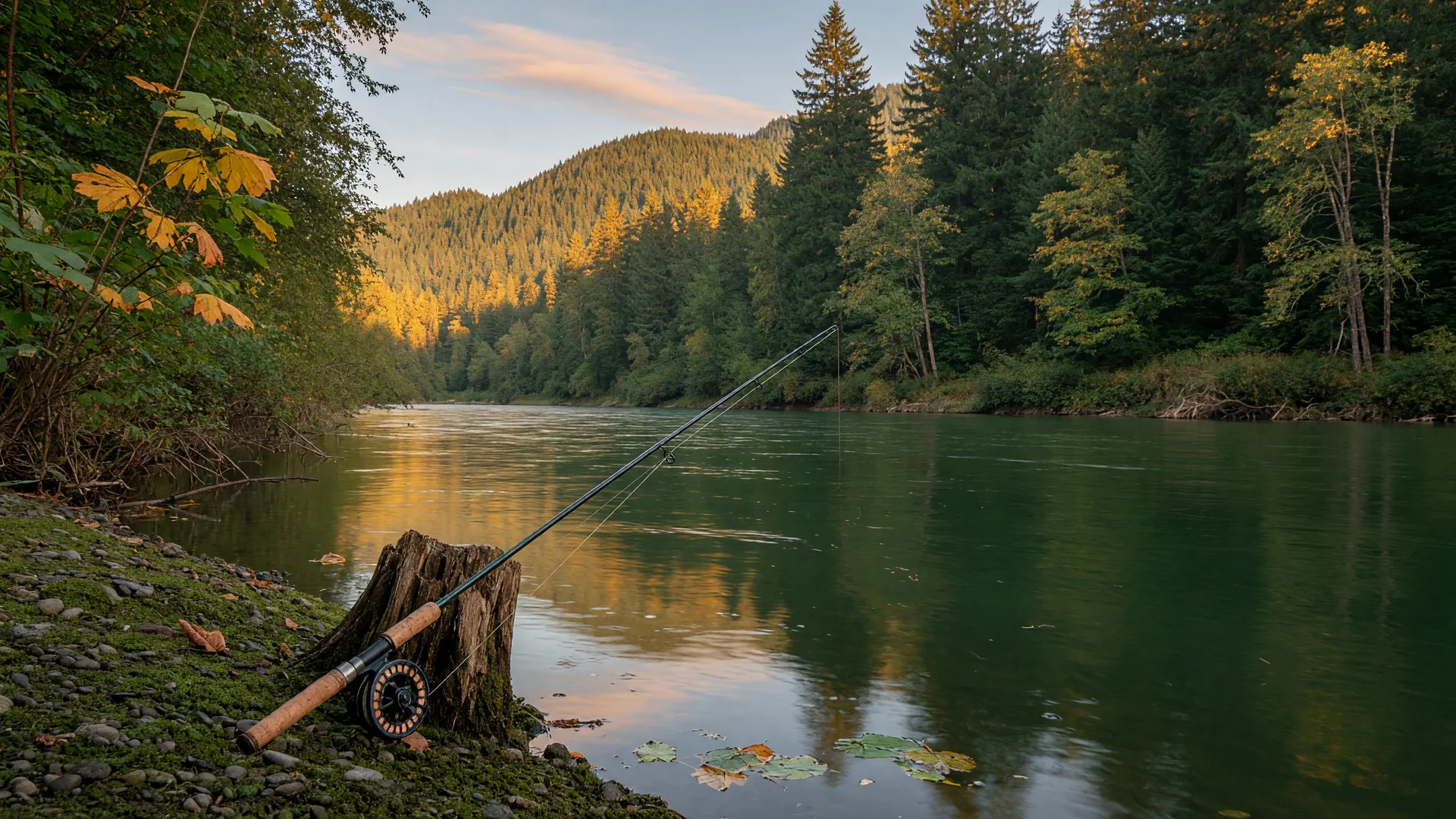
When late August rolls around in Lewis County, the evenings get a little cooler, the cottonwood leaves start turning, and the Cowlitz River comes alive with fall Chinook. For anglers across the Pacific Northwest, this is the main event. The Cowlitz is one of Washington's premier salmon and steelhead rivers, and it runs through the heart of our county from Salkum and Silver Creek all the way down through Toledo and past the I-5 bridge. Whether you are a seasoned drift-boat veteran or someone who just picked up a rod this summer, the Cowlitz has a spot for you.
Why the Cowlitz River?
The Cowlitz is the largest river in Lewis County by volume, draining the snowpack of Mount Rainier and the Goat Rocks Wilderness before winding through the Cascade foothills and emptying into the Columbia. Its size and flow make it productive for fish and accessible for anglers. Hatchery production at the Cowlitz Salmon and Trout Hatcheries near Salkum and Blue Creek puts close to 13 million fish into this system every year, including spring Chinook, fall Chinook, coho, and summer and winter steelhead. For a river this close to I-5, it feels remarkably wild. Steep forested banks, gravel bars, and the occasional bald eagle perched in a cottonwood overhead.
What is running right now (late summer and early fall)?
Late August through September is fall Chinook season. These are big, powerful fish that stack up in the river on their way to the hatcheries. Coho salmon start showing in September, and summer steelhead are still in the mix. Here is the quick breakdown for late August 2026:
- Fall Chinook -- Arriving now and building through September. Minimum 12 inches, daily limit 6 fish (no more than 2 adults). Hatchery fish only, check for the clipped adipose fin.
- Coho -- Start showing in September, overlapping with fall Chinook through November.
- Summer Steelhead -- Still available in the river. Minimum 20 inches, daily limit 3.
- Trout -- Season runs from the Saturday before Memorial Day through March 31. The Cowlitz holds good rainbow and cutthroat populations.
Important: You need a Columbia River Salmon and Steelhead Endorsement (CRSSE) if you are targeting salmon or steelhead and you are 15 or older. Always check current Washington Department of Fish and Wildlife regulations before heading out, as retention rules can change mid-season.
Where to fish: the best access points
The Cowlitz has plenty of public access, thanks to WDFW and Tacoma Public Utilities. Here are the top bank-fishing spots, listed from upstream to downstream.
Barrier Dam (Salkum)
Located just below the Cowlitz Salmon Hatchery at 125 Salmon Lane in Salkum, the Barrier Dam area is one of the most popular fishing sections on the entire river. Fish stack up below the dam as they wait to enter the hatchery, making this a productive spot for bank anglers and drift boats alike. There is a boat launch and a campground nearby. The Barrier Dam to Toledo float is about seven miles and is the classic Cowlitz drift-boat run. From Centralia, take Highway 12 east for about 30 minutes past Mossyrock, then follow the signs to the hatchery.
Blue Creek / Trout Hatchery (near Toledo)
The Cowlitz Trout Hatchery at Blue Creek, southwest of Toledo, is another prime access point. WDFW has installed ADA-accessible fishing platforms here, making it one of the most welcoming spots on the river for anglers with mobility challenges. There is also a boat launch, making it a popular take-out point for the Barrier Dam drift. The area is less pressured than the dam, especially on weekdays. Follow Highway 12 to the Blue Creek Road turnoff south of Salkum.
Massey Bar
Downstream from Blue Creek, Massey Bar is a well-known bank-fishing access with parking, restrooms, and plenty of gravel bar to spread out. It is a popular drift-boat take-out and a solid spot for bank fishing when the salmon are moving through. Access is via Massey Bar Road off Highway 12.
I-5 Bridge / Toledo
Near the Interstate 5 bridge crossing at Exit 57 (Toledo), WDFW maintains a bank-fishing area and boat launch. This is one of the most convenient access points for anglers coming from the Centralia-Chehalis area. It is about 15 minutes south on I-5. The fishing here can be excellent, especially as fish stage before pushing further upstream. The town of Toledo also has a newer access point on Augustus Street off State Route 505 with nearby services.
Kosmos (east of Morton)
For a quieter, more rugged experience, head to the Kosmos access area east of Morton on Highway 12. This is further upstream, close to the foothills of the Cascades, and sees far fewer anglers than the lower river. The water is clearer and colder here, and the scenery is spectacular. Think steep forested valleys and distant mountain views.
What about the hatcheries?
The Cowlitz hatcheries are worth a visit even if you are not fishing. The Cowlitz Salmon Hatchery near Salkum is one of the largest in Washington, producing millions of fall Chinook, spring Chinook, and coho each year. It has a visitor center with self-guided tours and interactive exhibits on the salmon life cycle. The Cowlitz Trout Hatchery at Blue Creek raises steelhead, cutthroat trout, and salmon, with viewing windows and accessible platforms. Both hatcheries are operated by Tacoma Public Utilities as part of the Cowlitz River Project, and they are open to the public during daylight hours. Fall is especially interesting. You can watch the salmon jumping at the Barrier Dam and see the hatchery workers spawning fish in the early autumn months.
Tips for a successful trip
- Check flows before you go. The Cowlitz is a river that responds quickly to rain. Target flows between 3,000 and 6,000 cubic feet per second for the best fishing. Check the USGS gauge at the Barrier Dam before heading out.
- Bring multiple gear setups. A 9-to-10-foot medium-heavy rod for plunking and a lighter spinning rod for drifting can cover most situations on the Cowlitz.
- Use gear that matches the water. For fall Chinook, popular setups include side-planer boards with plug cut herring or Spin-N-Glos behind a diver. Drift fishing with sand shrimp or cured salmon eggs works well for steelhead and coho.
- Waders and a wading staff are essential. The Cowlitz has deep pools and slippery basalt ledges. Do not wade in alone, especially in unfamiliar water.
- Respect bank access and other anglers. Crowded days are part of the deal during peak Chinook runs. Give other anglers space, and never block a boat launch or ramp.
- Bring rain gear. Even on a sunny August day, the Cowlitz Valley can produce its own weather. A light rain shell will keep you comfortable when the marine layer pushes in.
Hiring a guide
If you are new to the river or just want to maximize your time on the water, several excellent guide services operate on the Cowlitz. Lance Fisher Fishing (lancefisherfishing.com, 503-680-6809) specializes in salmon, steelhead, and sturgeon and knows the Cowlitz intimately. Chrome City Guide Service (chromecityguideservicellc.com) covers the Cowlitz, Kalama, and Lewis Rivers. Fly anglers should look up Mike Sturza Fly Fishing Guide Service (lostcreekflies.com), who guides the Cowlitz along with the Lewis and Chehalis Rivers. Rates typically run $350-$500 per day for a drift-boat trip with two anglers, gear and bait included.
What else is nearby?
The upper Cowlitz Valley has plenty to round out a weekend. After a day on the river, grab a burger in Toledo or Morton, hike the nearby trails at the Cowlitz Valley Wildlife Area (a 15,420-acre WDFW-managed property with eight units across the county), or drive the White Pass Scenic Byway for views of Mount Rainier, Mount St. Helens, and Mount Adams all from a single viewpoint on the Salkum Plateau. Lake Scanewa, formed by the Cowlitz Falls Dam near Randle, offers another option for boating and fishing in a quieter setting upstream.
The Cowlitz River is a Lewis County treasure. Whether you come for the fall Chinook, the summer steelhead, or just the peace of a river running through the woods, it is a place that rewards the effort. See you on the bank.